
What is Erwinia amylovora (Fire Blight)?
Erwinia amylovora is a Gram-negative bacterium that causes extensive damage to fruit trees, particularly apples and pears. This bacterium causes a common and serious plant disease known as fire blight. The disease can affect every part of the tree, from its leaves to its fruit, and in severe cases, can kill the entire tree.
Characteristics of Erwinia amylovora
- Broad Host Range : Affects various fruit trees, particularly apple and pear. It can also cause disease in some ornamental and wild plants.
- Transmission and Spread : The bacteria can be spread by rain, wind, insects, birds, and farm equipment. The bacteria enter the plant through wounds, flowers, and stomata (pores in plant leaves).
- Optimum Conditions : Erwinia amylovora becomes more active in warm, humid weather. The rate of spread of the bacteria increases after rainfall in spring and summer.
Symptoms of Fire Blight Disease
- Flower Burn :
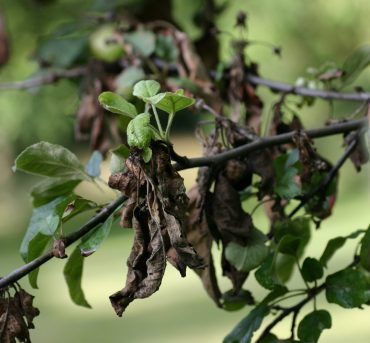
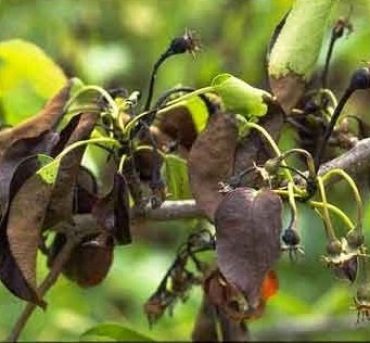
- The earliest symptoms usually appear on the flowers. Infected flowers appear water-soaked and then turn brown or black. The flowers appear wilted.
- Branch and Shoot Burn :
- Young shoots develop a rapidly spreading blight from the tip. The tip of the branch may curl like a shepherd’s crook and turn black.
- Body Cancer :
- Cracks and cankers form on the tree trunk and branches. Bacterial leaks can be observed from these areas.
- Fruit Stains :
- Infected fruit develops water-soaked, dark brown spots. Over time, the fruit tissue begins to rot.
Distribution Routes of Erwinia amylovora
- Rain and Wind : Bacteria can be transported from plant to plant by rain and wind.
- Insects : Bees, flies, and other insects can spread the bacteria from flowers to other plant parts.
- Human Activity : Bacteria can be transmitted to other plants during agricultural tools and pruning operations.
Which Product is the Solution?
It is PHOSFULL SET that acts on Phytophthora.
Application Methods:
PHOSFULL SET
Maxtor+Fitor+Phosfull Set bottom application;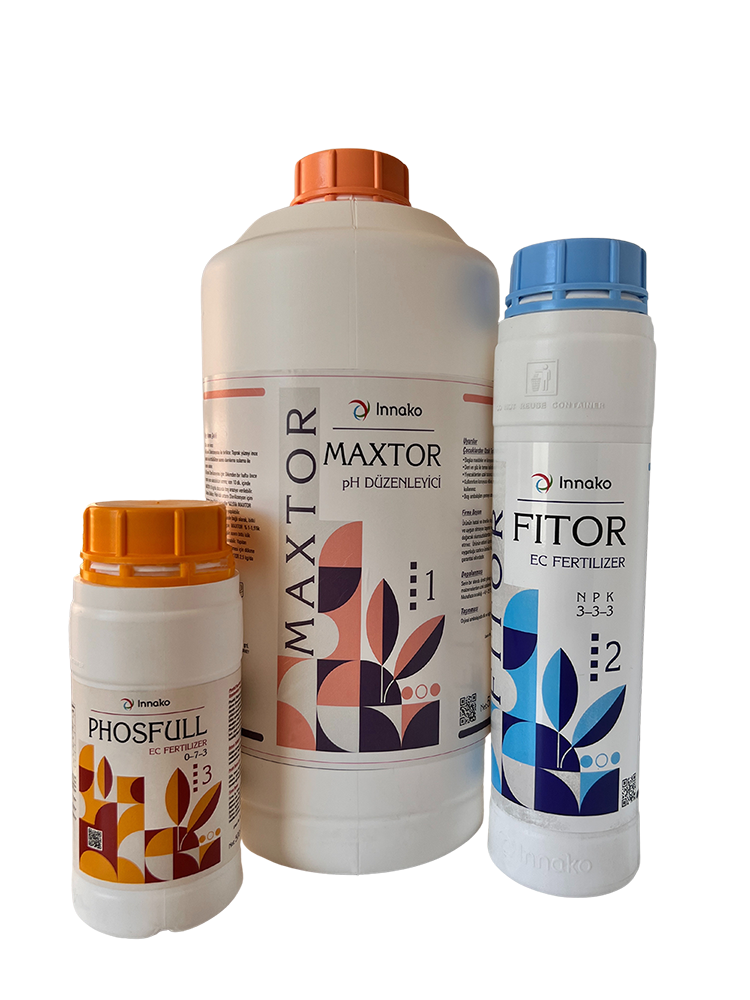
4 sets of Maxtor+Fitor+Phosfull are added to minimum 250 liters of water for 1 hectare (10 acres) and applied via dripping in the last 20 minutes of irrigation.
Maxtor+Fitor+Phosfull Set top application;
2 sets of Maxtor+Fitor+Phosfull are added to 1,000 liters of water and applied by washing the plant from the top.
The treatment should be applied twice in a row, on Day 1 and Day 5. Depending on the severity of the condition, reapplications may be made every two weeks.
Struggle Methods
- Hygiene and Cultural Precautions :
- Infected plant parts should be pruned and destroyed. Pruning tools should be disinfected regularly during pruning to prevent the spread of bacteria to uninfected tissue.
- It is important to monitor trees regularly and intervene quickly when the first symptoms appear.
- Chemical Control :
- Copper-based fungicides and antibiotics (e.g., streptomycin) can be used to treat fire blight. However, antibiotic use may be restricted in some areas and may lead to the development of resistance.
- Use of Resistant Varieties :
- Fruit tree varieties resistant to fire blight have been developed. Using these varieties can help prevent the spread of the disease.
- Biological Control :
- Some biological agents, such as antagonist bacteria, can be used to control fire blight disease.
Economic and Ecological Importance of Fire Burn
Fire blight can cause significant economic losses for fruit growers. It poses a significant threat, particularly in commercial apple and pear cultivation. The disease reduces tree yields, impairs fruit quality, and can lead to the complete loss of infected trees. Therefore, control and management of Erwinia amylovora is crucial in fruit-growing regions.
An effective management strategy against fire blight is critical to preventing the spread of the disease and minimizing long-term production losses.